 HealthTracker
There's real research behind the idea that oats lower cholesterol — specifically, they can help reduce LDL cholesterol, the type most people are told to keep an eye on. This isn't a marketing myth. It's one of the better-studied food-and-cholesterol links we have, and it comes down to a single kind of fibre in oats called beta-glucan.
That said, "oats lower cholesterol" is a headline, and headlines leave out the details. How much it helps, how much you'd need to eat, and what it actually means for your own numbers — that's the useful part, and that's what this article is about. Nothing here is medical advice; it's just an explanation of what oats do and why so many people who get a blood test back start reaching for the porridge.
What "lowering cholesterol" actually means here
When people talk about cholesterol on a blood test, they usually mean a few different numbers. There's LDL (often called "bad" cholesterol because higher levels are linked with more buildup in arteries), HDL (often called "good"), and total cholesterol, which is roughly the whole picture added together.
The oats effect is mostly about LDL. Studies going back decades — enough of them that food regulators in the US and Europe allow oat packaging to mention heart health — have found that regularly eating oats can modestly lower LDL and total cholesterol. "Modestly" is the honest word. We're talking a few percent for most people, not a dramatic overnight drop. But a small, steady change that costs you nothing and tastes like breakfast is still worth understanding.
The actual reason: beta-glucan
The magic ingredient isn't oats in general — it's a soluble fibre called beta-glucan. "Soluble" means it dissolves in water, and when it does, it turns into a thick, gel-like substance in your gut. That gel is the whole story.
Here's roughly what happens. Your body uses cholesterol to make bile acids, the fluid that helps you digest fat. Normally your gut reabsorbs a lot of those bile acids and recycles them. The beta-glucan gel traps some of them and carries them out of the body instead. To replace what's lost, your liver pulls cholesterol out of your blood to make fresh bile acids — and that's what can nudge your LDL number down.
It's a genuinely elegant bit of biology, and it explains a few things: why it's the soluble fibre that matters, why it only works if you eat oats regularly rather than once, and why simply sprinkling a tiny amount on top of a sugary cereal won't do much.

How much oats are we talking about?
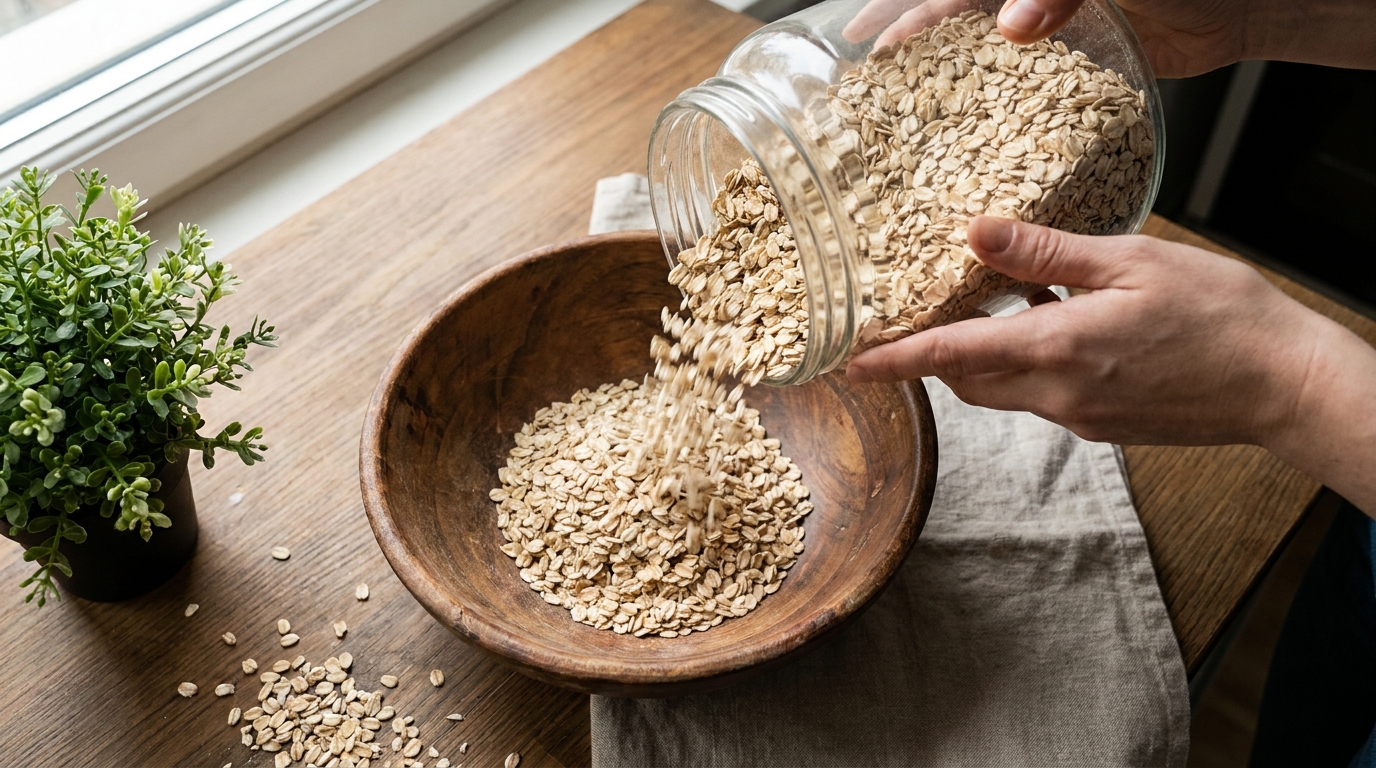
Most of the research that found an effect used around 3 grams of beta-glucan a day. In real food, that's roughly what you'd get from a decent bowl of oatmeal — somewhere around 40 to 60 grams of dry oats, depending on the type. A standard serving of porridge or overnight oats lands in that neighbourhood.
A few practical points people don't always realise:
- Rolled, steel-cut, and instant oats all contain beta-glucan. Steel-cut and rolled oats are less processed, but the fibre is still there in instant oats. The bigger issue with many instant packets is added sugar, not lost fibre.
- Oat bran is more concentrated. Because beta-glucan is richest in the outer layer of the grain, oat bran packs more of it per spoonful than whole oats.
- It has to be regular. One bowl doesn't reset anything. The studies that showed a change had people eating oats daily for weeks.
- Drinking water helps. Soluble fibre works by forming a gel, and it needs water to do that.
What oats won't do
This is the part worth being clear about. Oats are food, not a treatment, and it helps to keep expectations honest.
Oats won't override everything else. If the rest of your day is heavy in the things that push cholesterol the other way, a morning bowl of porridge isn't a magic eraser. Diet is one input among many — genetics play a huge role in cholesterol, and for some people, no amount of oats will move the number much, because their levels are driven by factors food can't reach. That's not a failure of the oats; it's just biology, and it's exactly the kind of thing worth talking through with a doctor rather than solving with breakfast alone.
Oats also aren't a replacement for anything a doctor has prescribed or advised. If someone is already being looked after for their cholesterol, food is a companion to that care, not a substitute for it. Nothing in a bowl of oats changes that conversation.
And oats won't work in isolation from the rest of what makes them helpful. Part of why oat-eaters tend to have better numbers is that a real breakfast of oats and fruit often replaces something less useful, and comes bundled with other whole foods. It's the overall pattern that does the heavy lifting.

Why people track this — and how
Here's the frustrating thing about cholesterol: you can't feel it. There's no sensation that tells you whether this month's breakfasts are doing anything. The only way to know is a blood test, and those happen months apart. So the honest answer to "are my oats working?" is that you find out slowly, over time, by comparing one result to the next.
That's exactly why some people log it. When your test results live in one place next to what you've actually been eating, you can look back over six months and see whether the daily oats lined up with any change in your LDL. It won't prove cause and effect — too many things move at once — but it turns a vague hope into something you can actually look at. That's the whole idea behind tracking your blood results and your food in the same app: not to diagnose anything, just to see your own trend clearly instead of guessing.
A couple of things make tracking more useful:
- Give it time. Since the effect builds over weeks, comparing tests taken a few months apart tells you more than any single number.
- Note what changed. If you started oats and started walking and cut back on takeaways in the same month, a change in your numbers can't be pinned on the oats alone. Writing down what changed helps you read the result honestly later.
What to do with this
Oats can lower cholesterol — modestly, gradually, and thanks to a specific soluble fibre called beta-glucan that helps your body shed cholesterol through your gut. A regular bowl, most days, made with real oats rather than a sugar-loaded packet, is the version that matches the research.
But "modestly" and "for most people" are doing important work in that sentence. Oats are a genuinely good habit, not a cure, and your cholesterol is shaped by far more than breakfast. The sensible move is to eat them because they're a solid, filling, affordable choice, track your blood results over time so you can see your own trend, and bring any actual questions about your numbers to your doctor — who can see the whole picture in a way a bowl of porridge never will.